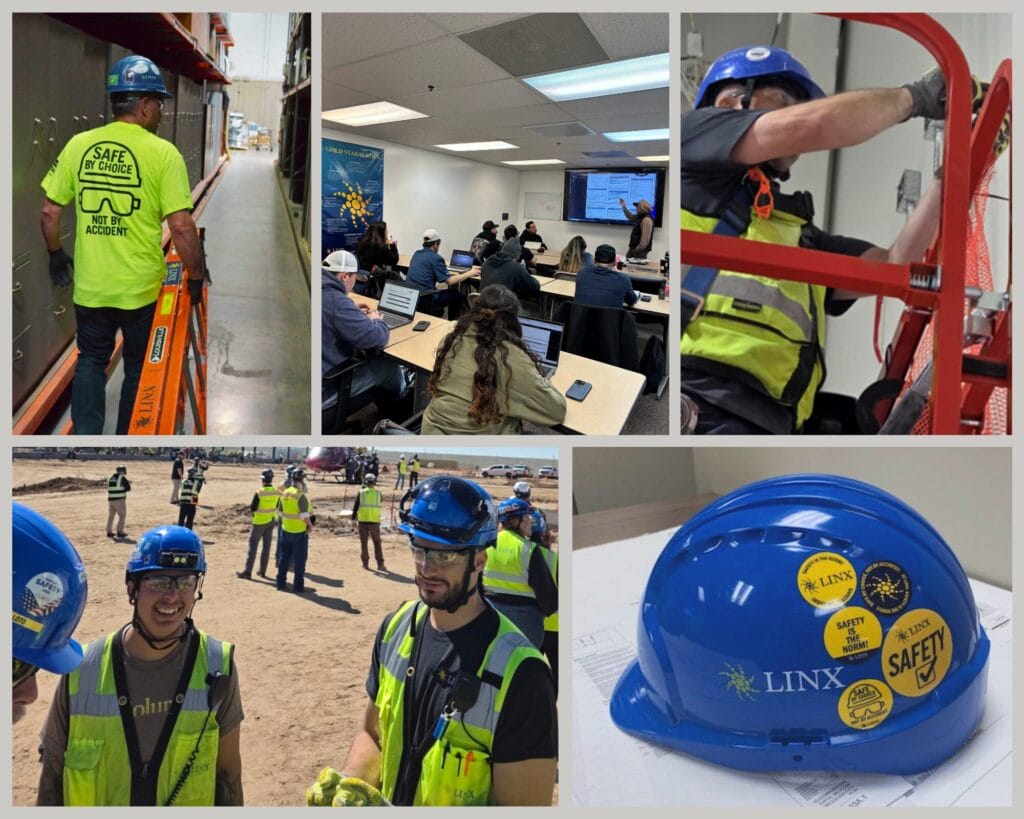
In construction, speed and scale matter. But nothing matters more than making sure every person goes home safe at the end of the day.
At LINX, safety is not a phase of the job. It is the system behind everything we do, shaping how projects are planned, how teams communicate, and how decisions are made every day. From the earliest stages of planning to the final walkthrough, safety is built into the way we operate.
It Starts with Mindset
Strong safety cultures begin long before boots hit the jobsite. They start with planning that gives teams the right information, resources, and expectations before work begins.
As Bryan Gervais, Director of Safety at LINX, explains, “Proper planning prevents poor performance.” That mindset helps teams identify risks early, coordinate more effectively, and make decisions that protect both people and project momentum.
On site, that mindset shows up in the daily habits that keep safety active:
- Pre-task planning that helps crews identify risks before work begins
- Daily huddles that reinforce priorities and align teams
- Clear communication that keeps everyone informed and aware
- Stop-work authority that empowers anyone to pause work if something does not feel safe, without fear of repercussion
These actions may seem simple, but repeated consistently, they create a proactive safety culture built on awareness, accountability, and trust.
Strengthened Through Training
No two projects are the same. Conditions shift, timelines evolve, and new challenges can surface without warning. Ongoing training helps teams adapt safely as those conditions change.
That is why continuous education remains an important part of how we operate. In the past year alone, LINX teams completed more than 75,000 hours of safety training. With in-house training capabilities, certified instructors, and regional trainers across the country, teams have access to job-specific education and required certifications when they need them most.
Training is not treated as a one-time requirement. Programs are continuously evaluated and updated to reflect changing regulations, industry trends, and real-world jobsite conditions. That includes expanding training efforts to address emerging challenges like mental health awareness in the construction industry.
Consistent training helps standardize expectations across projects, improves coordination between teams, and allows LINX to scale while maintaining consistent standards across multiple markets and jobsites.
See Something, Say Something
Safety depends on every person being willing to speak up.
One of the most important parts of a strong safety culture is creating an environment where people feel confident raising concerns, asking questions, or stopping work when something is not right. That level of trust does not happen by accident. It is built through communication, leadership support, and a shared responsibility to look out for one another.
“See Something, Say Something” has become an important part of the safety culture at LINX. For Bryan, the philosophy goes beyond identifying hazards. It is about protecting the people around you and recognizing that safety is everyone’s responsibility.
“If you see something, say something is our first line of defense,” Bryan explains. “It is designed to identify risks, near misses, unsafe acts, and unsafe conditions before somebody gets hurt.”
That awareness does not stop with our own scope of work. LINX teams are encouraged to identify risks across the entire jobsite because one unsafe condition can impact everyone working in the same space. When concerns are raised early, issues can be addressed before they create delays, disruptions, or added risk for the project as a whole.
The Bigger Picture
When safety is built into the way a project runs, everyone benefits. Risks are addressed earlier, small issues are less likely to become costly delays, and the work can move forward with fewer disruptions.
For clients, that matters. It means safety is not just a requirement on paper. It is part of what makes a project more predictable, more coordinated, and better positioned for success.
We want our clients to feel confident having our teams on site, knowing our safety culture supports the entire project, not just our own scope of work. At LINX, safety is not separate from project success. It is one of the ways we help deliver it.