Emergency Responder Radio Coverage (ERRCS)
When firefighters enter a building, their radios have to work — in the stairwells, in the basement, in the elevator lobby, and in the parts of the structure that block signal by design. Concrete, steel, low-E glass and below-grade construction all attenuate the public safety bands, and a building that performs perfectly for cellular can still fail a radio coverage test.
An Emergency Responder Radio Coverage System, sometimes called ERRCS or ERCES, fixes that. It captures the public safety signal, amplifies it, and redistributes it through the building so responders keep contact with each other and with dispatch.
LINX designs, installs, commissions and maintains these systems, and we work with the Authority Having Jurisdiction from the survey onward rather than at the end.

What the Code Actually Requires
Requirements come from the International Fire Code Section 510 and NFPA 1225, as adopted and amended locally. The figures below are the typical thresholds. Your AHJ sets the final requirement, and local amendments are common — confirm before design.
| Requirement | Typical threshold |
|---|---|
| General building areas | 95% floor-area radio coverage |
| Critical areas | 99% floor-area radio coverage |
| Inbound signal strength | −95 dBm minimum |
| Voice quality, both directions | DAQ 3.0 — understandable with slight effort, occasional repetition |
| Testing | On acceptance, then every 12 months, documented and signed by a person approved by the AHJ |
| Secondary power | 12 hours at full system operating capacity |
| Low-battery signal | At 70% depletion of the 12-hour capacity |
| Supervision | Signal source malfunction, RF device failure and component failure must all annunciate |
Critical areas are designated by the fire code official and usually include fire command centers, exit stairs and passageways, elevator lobbies, standpipe cabinets and sprinkler valve rooms.
What a System Actually Involves
An ERRCS is a complete signal path, not a single box. Each part has to be specified against the coverage the building actually needs.
- Donor antenna — roof-mounted, aimed at the public safety site that serves the area.
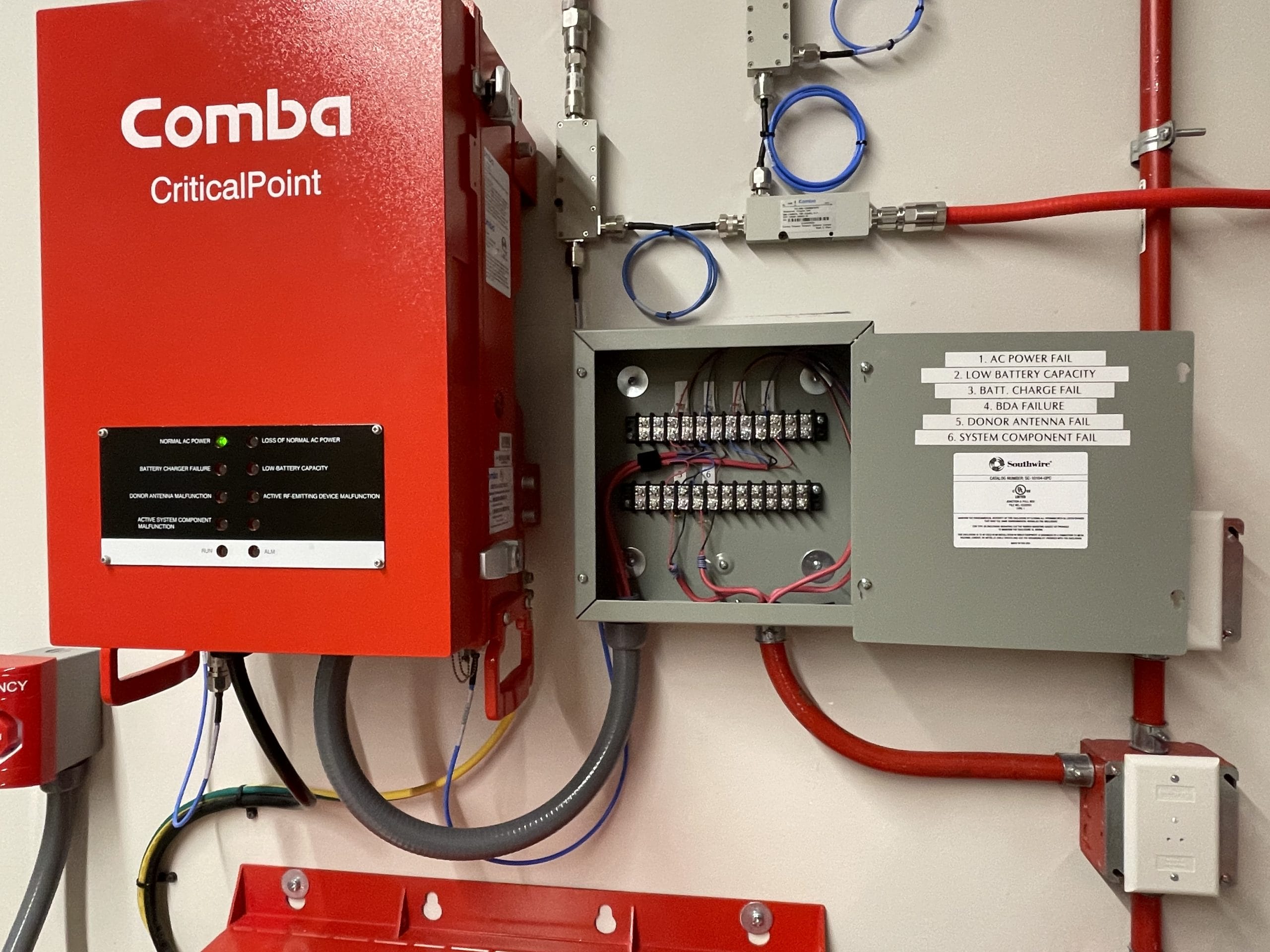
- Bi-directional amplifier — the head end, in a listed enclosure, usually NEMA 4 and fire-rated.
- Distributed antenna network — coax or fiber risers feeding antennas placed from the survey data.
- Battery backup — sized for 12 hours of full operation and supervised for depletion.
- Annunciator panel — normally at the fire alarm panel or fire command center.
- Survivable pathways — cabling protected to the standard the local code requires.
Which Buildings Need One
Adoption varies by jurisdiction, but a building generally falls in scope when it is new construction over a size threshold, when it is undergoing major renovation, or when a coverage test fails. The building types that most often require a system:
- High-rise — commonly 75 feet and above, where stairwell and upper-floor coverage is the usual failure point.
- Underground and below-grade — parking structures, tunnels, basements and anything with no path to the outside.
- Healthcare — hospitals and large medical facilities, where shielding and dense construction work against signal.
- Large commercial and industrial — warehouses, distribution centers, manufacturing and big-box retail.
- Education — campus buildings, dormitories and athletic facilities.
- Multifamily and hospitality — where the same construction that blocks cellular also blocks public safety bands. See our multifamily coverage page.
The practical trigger is often simpler than the code language: if the fire marshal walks the building with a radio and loses contact, you need a system.
How a Project Runs
Most ERRCS problems are discovered late — at final inspection, with a certificate of occupancy waiting on them. Running the survey early is the single biggest thing that keeps a project on schedule.
A project normally runs in six stages:
- Benchmark survey — measure existing public safety coverage on a grid and establish whether a system is required at all.
- Design and AHJ review — model the distribution, size the amplifier, and submit for approval before anything is ordered.
- Installation — coordinate risers, pathways and enclosure locations with the electrical and fire alarm trades.
- Commissioning — tune the system and verify every grid square against the required thresholds.
- Acceptance test — performed with the AHJ present, documented and signed.
- Annual testing — the obligation that continues for the life of the building.
The Part Buildings Forget: Annual Testing
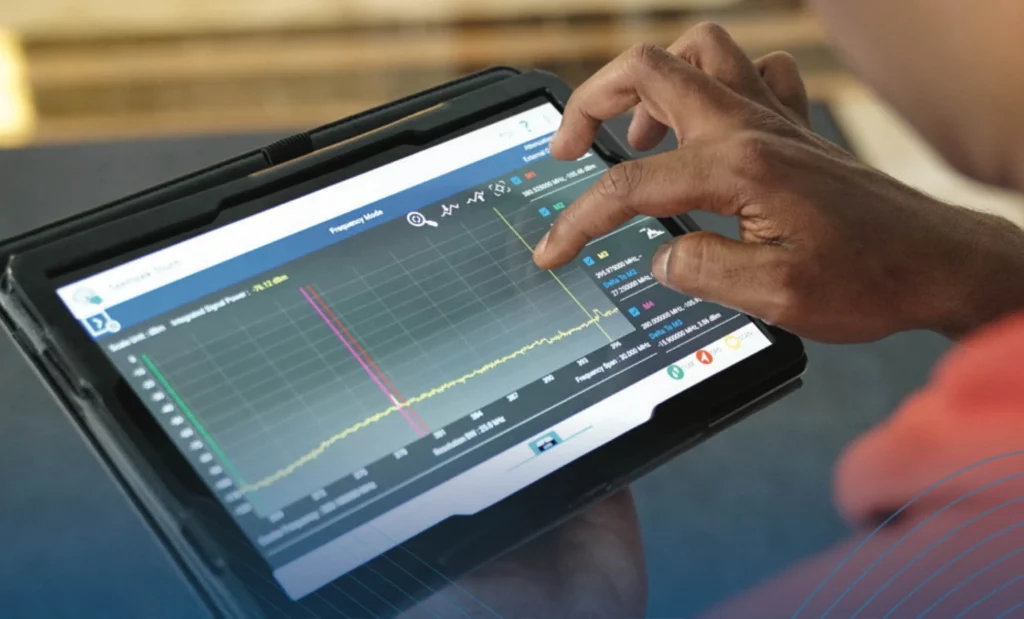
An ERRCS is not a one-time installation. The code requires a documented test every twelve months, signed by someone the AHJ approves, and the results stay on file for inspection.
Coverage also drifts. A carrier re-points a public safety site, a tenant fit-out adds walls, a neighboring tower goes up, batteries reach end of life — any of these can move a compliant building out of compliance without anyone noticing. The annual test is what catches it.
Where a system fails, the consequences are practical rather than theoretical: occupancy can be withheld on a new building, and an existing building can face re-inspection and correction orders. Both are cheaper to avoid than to resolve.
LINX carries out annual testing on systems we installed and on systems we inherited from another integrator.
Public safety coverage and commercial cellular coverage are separate systems that share the same pathways. If your building needs both, see in-building cellular and DAS.
Talk to Us Before the Final Inspection
If you have a building in design, a project approaching occupancy, or a system that has not been tested in over a year, a benchmark survey is the place to start. It is a short exercise and it tells you definitively whether you have a problem.